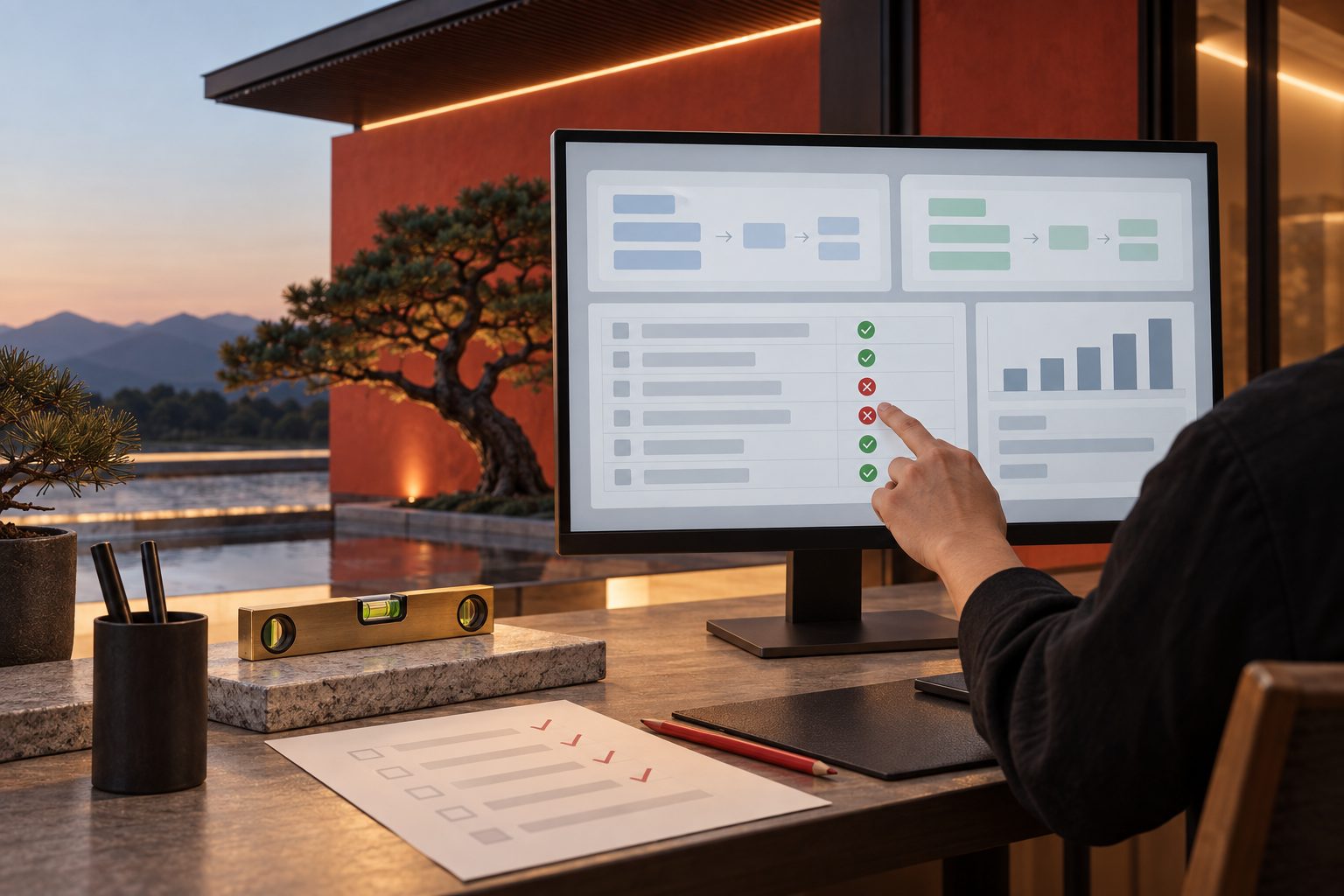
A site that loads and APIs that return success are prerequisites for launch. Once the system is really part of the business, new questions appear: how often it is used, where exceptions cluster, how information is kept current, how people hand over. At this stage, FDE work has to turn into routines the team can keep running for the long term.
Keep the impact contained first
Google SRE’s canary release approach sends a new version to part of the traffic first, watches the signals, and only then decides whether to widen it.[1] For business AI applications, this becomes a gradual rollout by team, type of business or permission level, with the groups drawn along real business and data boundaries.
For example, let one authorized group use the reply-suggestion feature first, with a person still pressing send. Only after the data matching and the day-to-day experience check out should the rollout widen. Before release, settle the owner, the signals to watch and the conditions for stopping, rather than debating what counts as abnormal after launch.
Prepare the way back in advance
Rolling back is not just switching a model name. Prompts, knowledge versions, API structure and permission settings can all change behavior, so you need to keep combinations of versions that work together. Business records already written need their own compensation or manual handling process; rolling back the software does not unsend a message.
A short runbook should tell whoever takes over how to pause automated actions, how to keep a read-only service running, how to restore the last working version, and how to find the affected tasks. Rehearsing it once before release is far more reliable than reading the documents in the middle of an incident.
Keep the weekly review to a few key questions
We suggest the review looks at task completion, the main categories of failure, why people took over and where users gave up. The data should state its sample and time window, so a pilot group’s results are not read as conclusions for the whole company. A human takeover is not necessarily a failure either; it can mean the boundaries are working as designed.
Each week, pick one problem worth solving, state a specific hypothesis, and test it with a controlled change. If staff keep going back to the old system to check when data was updated, the next step might be to show that timestamp, not to swap the model straight away. Each improvement should target the cause you observed.
Turn field problems into shared capability
Once a problem is fixed, update the related rules, tests and runbook. If only the engineer remembers a special workaround, the team is likely to make the same mistake again. Turning problems into reusable material is how daily maintenance gradually depends less on one person’s experience.
Handover needs clear boundaries too: what the business maintains, which changes need engineering, who approves permission changes, and how often knowledge and processes are reviewed. Ongoing operations does not mean endlessly adding features. It is more like maintaining a working path, so that it can still be understood and used as the business changes, and can be stopped safely when needed.
Before release, have whoever takes over rehearse it once for real: pause automated actions, find the failed tasks, and restore a known working version.
References
This article combines public sources with SWYZL & Co.’s recommended methods. The hypothetical scenarios illustrate design thinking and do not represent client results.