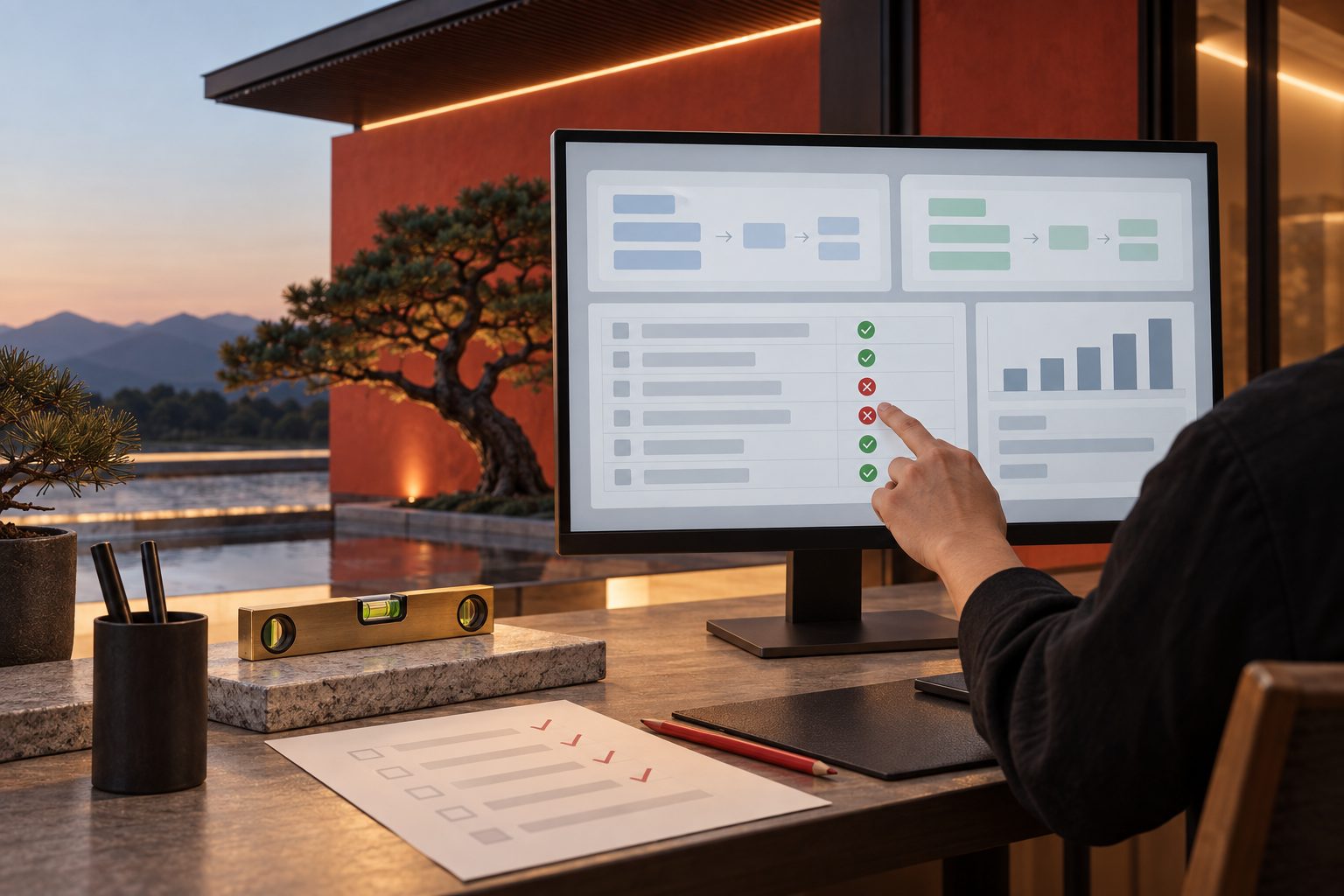
When a company says it wants an AI system, the need usually hasn’t taken shape yet. Some want less repetitive data entry, some want to respond to customers faster, and some have simply noticed the old process can’t keep up with the business. The FDE’s job is the distance between these ideas and software that runs.
First, understand the role
FDE stands for Forward Deployed Engineer. Palantir’s description of the related FDSE role stresses engineers working close to the customer, combining platform capabilities into usable solutions while feeding field experience back to the product team. That description reflects one company’s practice; it is not a single definition for every FDE role.[1]
As SWYZL & Co. sees it, what’s worth borrowing from this way of working is keeping the people who understand the problem involved throughout delivery. Requirements interviews, API design, prototype testing and post-launch feedback should not be disconnected pieces of work. Engineers need to know why users need a feature, and business owners need to see where the technical limits are.
Write “what to build” as an observable result
Say a vehicle operations team asks for “a smart support bot”. That could mean knowledge Q&A, trip lookups, draft replies or automatic exception handling. What the project really needs first is a statement of the result: who hits which problem at what moment, how it’s handled today, and what should change once the system steps in.
For example, narrow the goal to “when support opens an enquiry, they see the right trip details alongside a reply suggestion with its sources”. That goal maps to a clear interface, clear data and a clear acceptance check. It doesn’t promise to handle everything automatically, but it lets both sides judge quickly whether the first version is worth continuing.
Hold technical decisions to a business test
If every lookup takes a long time, even correct answers can break the rhythm of service. If information updates slowly, staff will go back to the old system to double-check, however smooth the interface. The FDE has to put model quality, data freshness, operating cost and human responsibility on the same table.
We suggest attaching a one-line business reason to every important technical choice. Keep human confirmation because replies involve billing disputes; connect read-only APIs first because this stage needs to check that the data matches. This stops a team from using tool names in place of judgment, and gives later changes something to stand on.
Field experience has to stay behind
At the end of a project, besides code that runs, three reusable things should remain: confirmed business rules, test cases that can be replayed, and a clear path for handling failures. They answer what the system works from, how to tell whether a change helped, and who takes over when something goes wrong.
An FDE’s value can be measured in these details: can business staff use it on their own, can the next engineer explain how the system behaves, and does the next similar request take fewer detours? Working close to the field is a method; the system delivered should depend less and less on any one engineer.
At kickoff, write one sentence together: which user, in what situation, will be able to do what that used to be hard.
References
This article combines public sources with SWYZL & Co.’s recommended methods. The hypothetical scenarios illustrate design thinking and do not represent client results.